Replay is a simulator used to emulate the trading process.
Replay allows you to:
Practice chart-reading skills.
Create new trading strategies and improve existing ones.
Practice trade entries and exits until they become second nature.
Improve psychological discipline, risk control, and capital management.
Analyze mistakes and identify ways to eliminate them.
Test trading robots.
How to Launch the Replay Simulator
Click the Replay button in the main platform window.
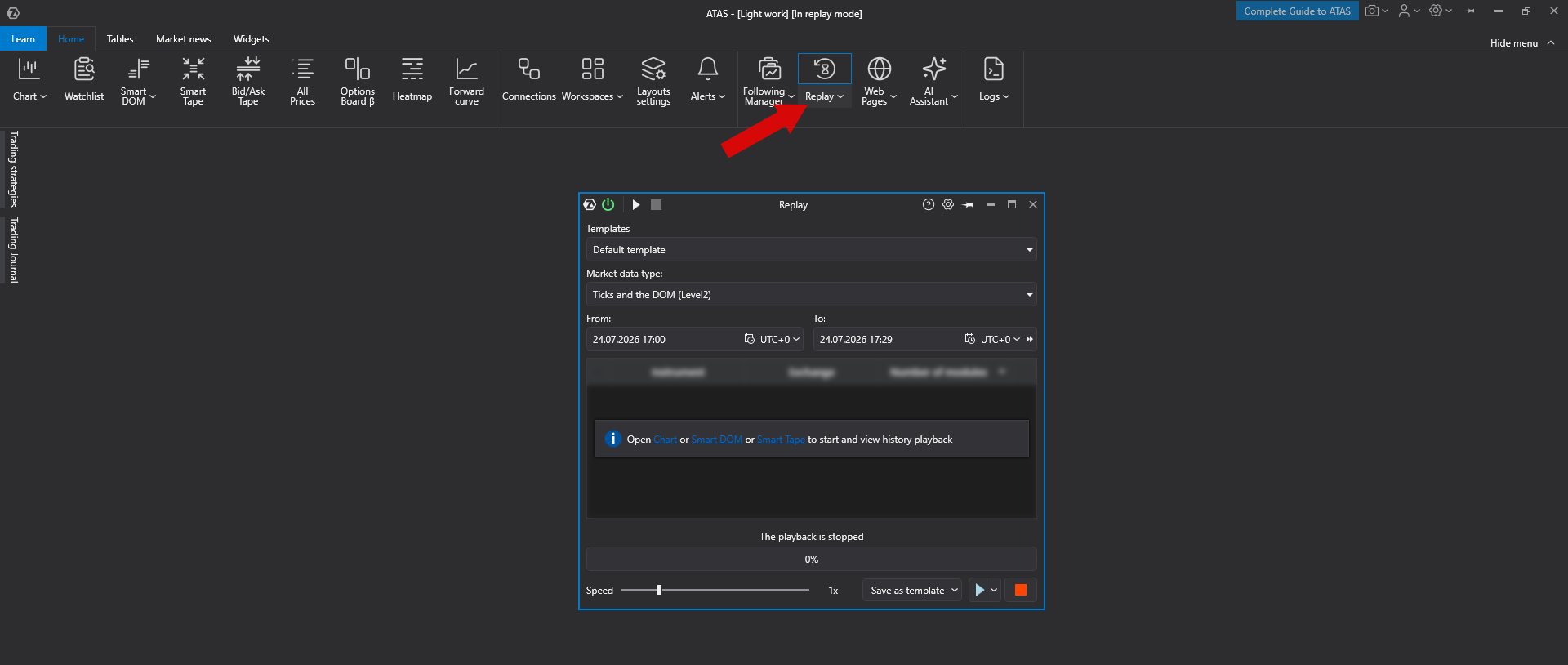
The Replay window will appear.
You will see a notification indicating that Replay is not connected.
ATAS uses the Windows system clock by default. When Replay mode is enabled, an alternative time source is created and the system clock is disabled for the platform. As a result, real-time chart updates and information related to live positions become unavailable. For this reason, we recommend separating live trading from Replay training sessions.
Activate training mode by pressing the red power button in the header of the Replay window.
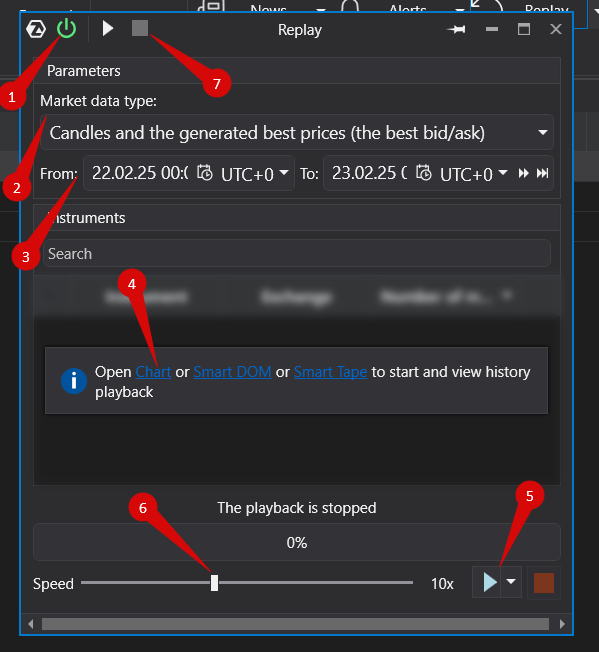
Select the history type. Three options are available:
Generated Ticks and DOM — the fastest way to get started. Suitable for practicing simple strategies without advanced volume analysis.
In this mode, history loading is unlimited.
Ticks + Generated DOM — recommended for strategies that do not use Level II (Market Depth) data.
In this mode, up to one week of history can be loaded.
Ticks + DOM — provides complete market data for maximum accuracy.
In this mode, only one day of history can be loaded.
Set the required replay dates.
Open the chart of the instrument you want to analyze by clicking Chart. You can also open Smart DOM or Smart Tape.
Press the Play button on the Replay control panel to start playback. The chart will begin replaying exchange trades for the selected period. You can adjust playback speed or pause the replay at any time.
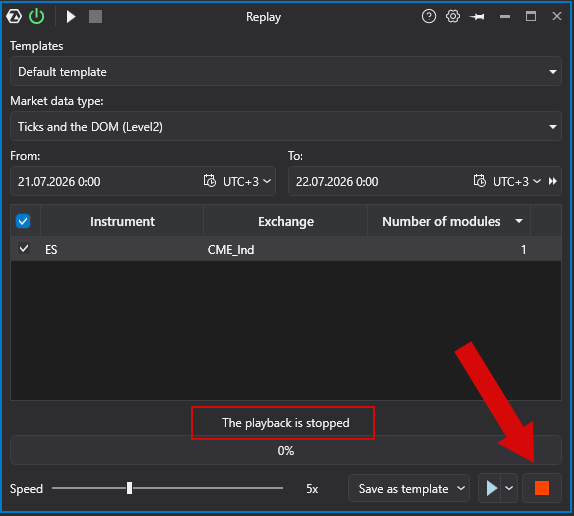
Click Stop (red square) to end the training session.
Use the Speed Control Slider to adjust playback speed. Higher values increase playback speed.
Use the Pause button to temporarily stop playback.
Working in Replay
To change the instrument, timeframe, template or add indicators - click on Stop button before.
How to Trade in Replay
Replay can be used to develop strategies, test indicators, and evaluate trading patterns. Since trading decisions are part of the learning process, Replay also supports simulated trading.
You can place orders in the Trading Panel
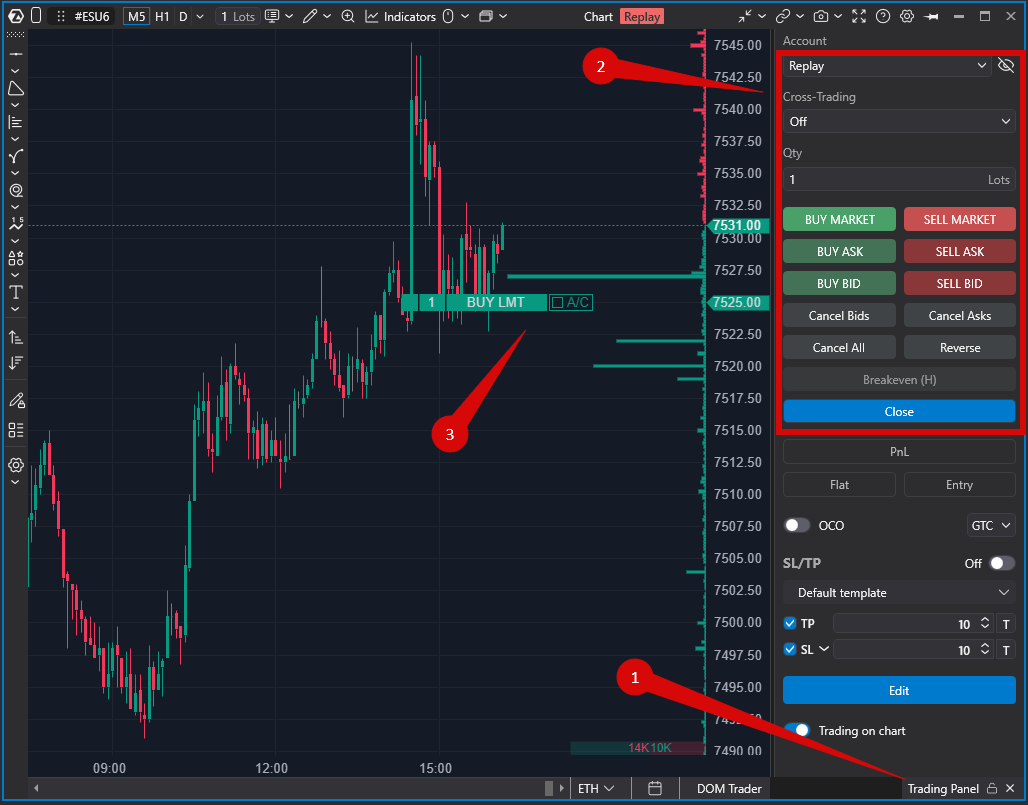
To start trading, open a dedicated Replay Account. All trades executed in the simulator will be recorded in this account and displayed on the chart.
After the session, you can analyze your performance in the Trading Journal module, including metrics such as Profit Factor, Drawdown, and other performance indicators.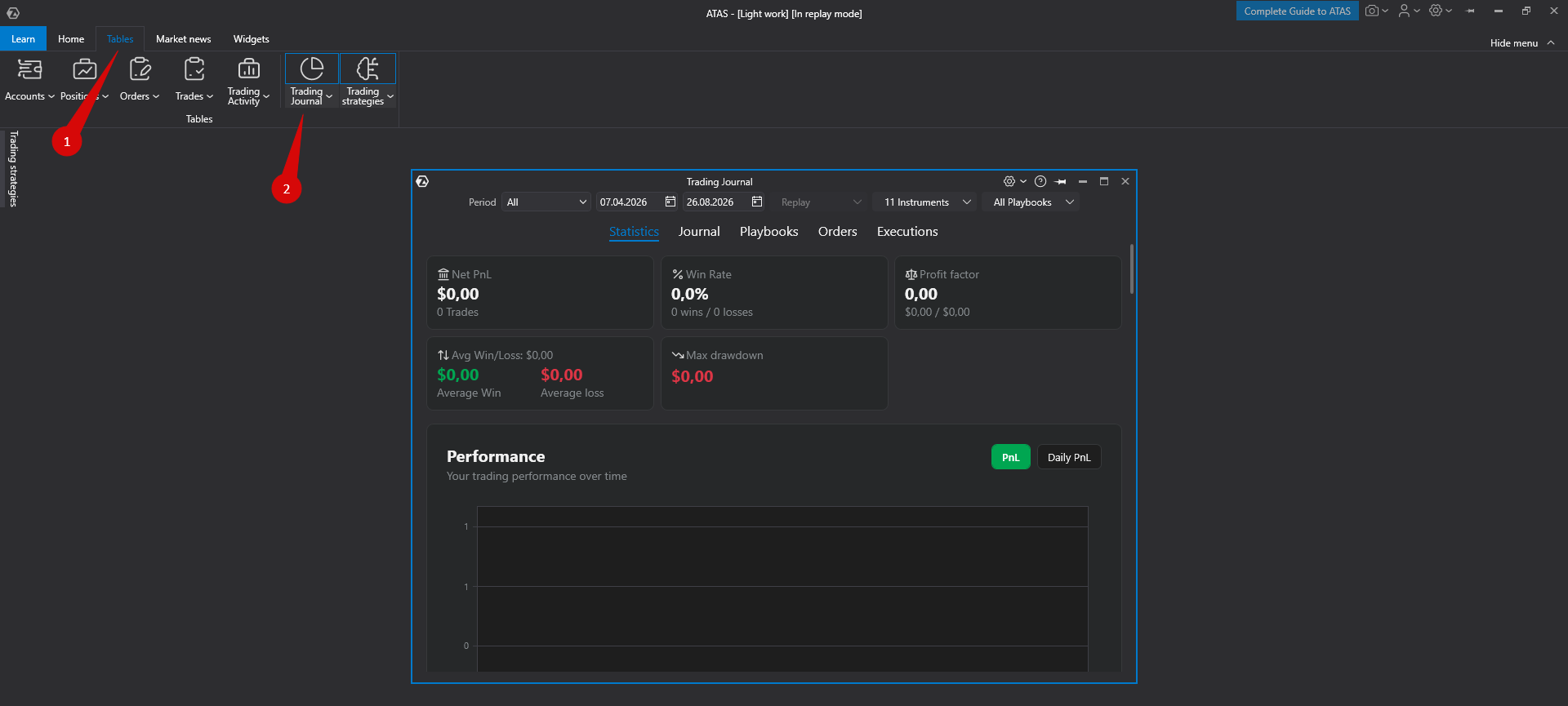
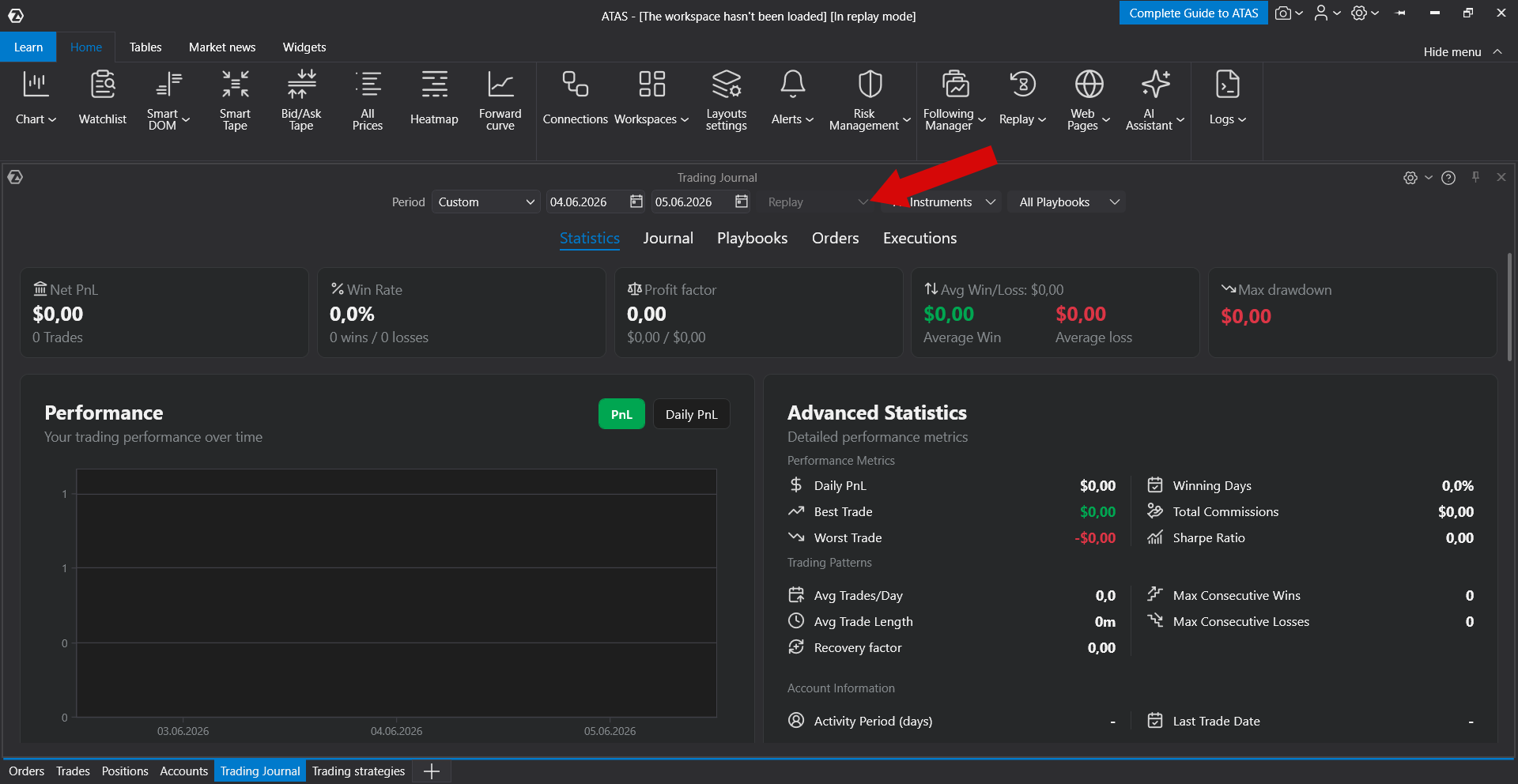
To review Replay trading statistics, open Trading Journal with Replay enabled. Please note that only one Replay Account is available. Each new training session resets the results of the previous session.
Restrictions
Start Plan: Replay is not available.
PLUS, PRO, and ULTRA plans: Replay is available. The available playback period depends on the selected Replay mode and market data type.
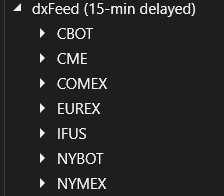
Charts connected through dxFeed are not available in Replay mode.
FAQ
Can Forex Traders Use Replay?
Forex is an interbank spot market, while ATAS connects only to exchanges such as CME, EUREX, NASDAQ, NYSE, and cryptocurrency exchanges. Therefore, direct Forex data is not available in ATAS.
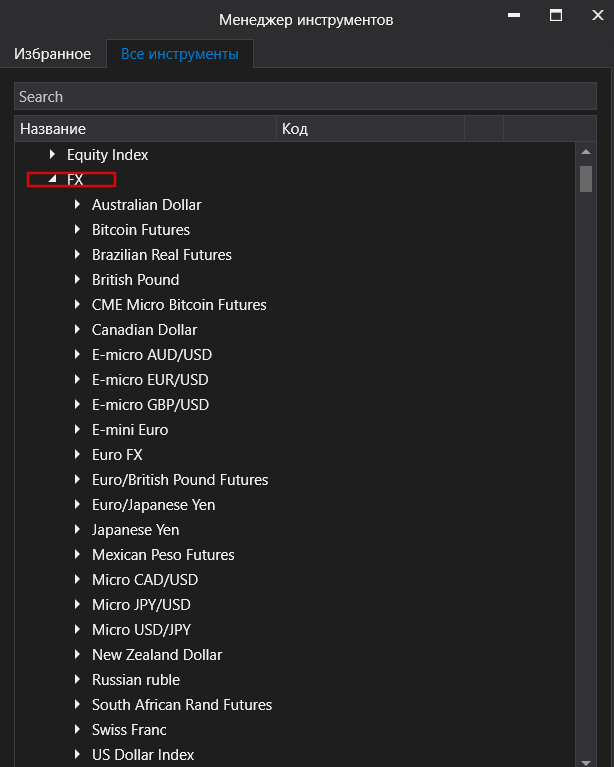
However, Forex traders can train in Replay using currency futures market data.
Can I Test Trading Robots?
Yes. ATAS allows trading robots to be connected via API. For more information, see: Algorithms for ATAS.
Is Slippage Simulated?
No. Slippage and market liquidity are too unpredictable to model accurately. Replay assumes ideal execution conditions, while in real trading slippage may work either in your favor or against you.
Was this article helpful?
That’s Great!
Thank you for your feedback
Sorry! We couldn't be helpful
Thank you for your feedback
Feedback sent
We appreciate your effort and will try to fix the article